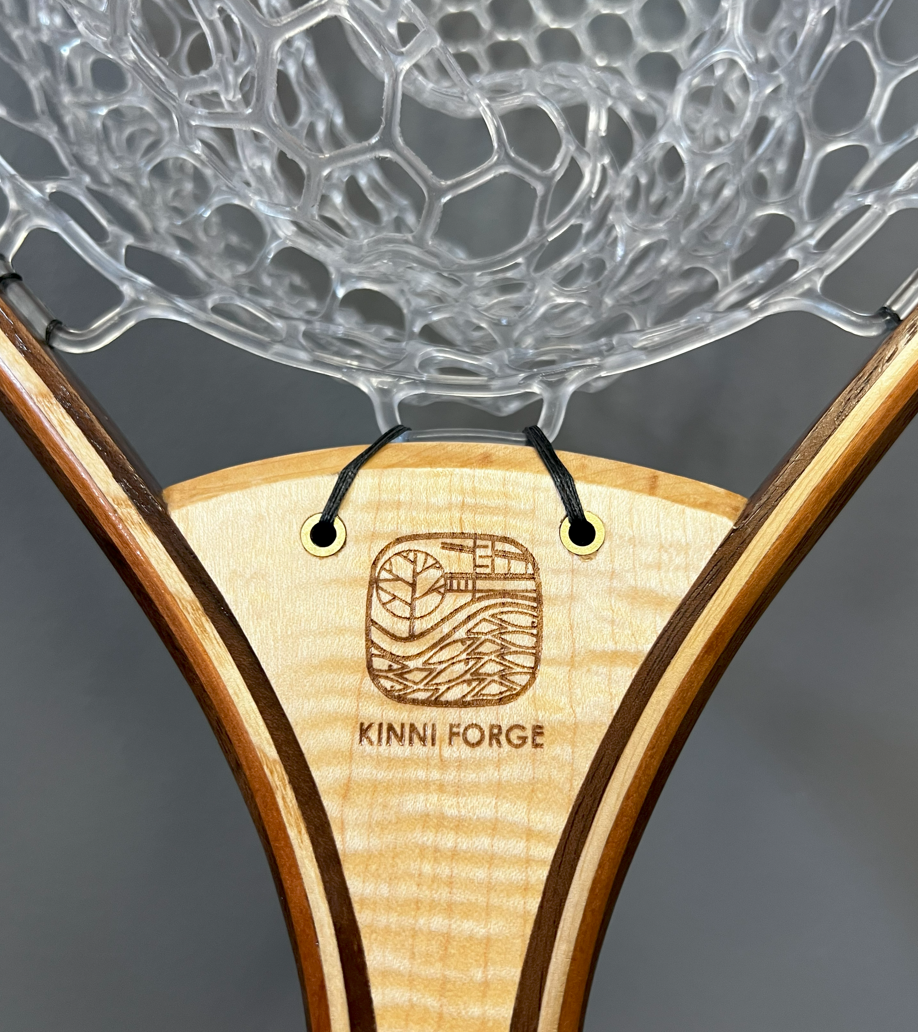
The Making of a Kinni Forge Landing Net
Steam, pressure, precision, and patience.
A Process Built Over Time
Kinni Forge landing nets are not carved from a single piece of wood. They are engineered through a layered steam bending process that creates strength, flexibility, and a distinctive visual grain pattern. While we share the general steps, many of the fine details remain part of our internal process and are not publicly disclosed.
The Process
-
3:1 Selecting & Prepping the Wood
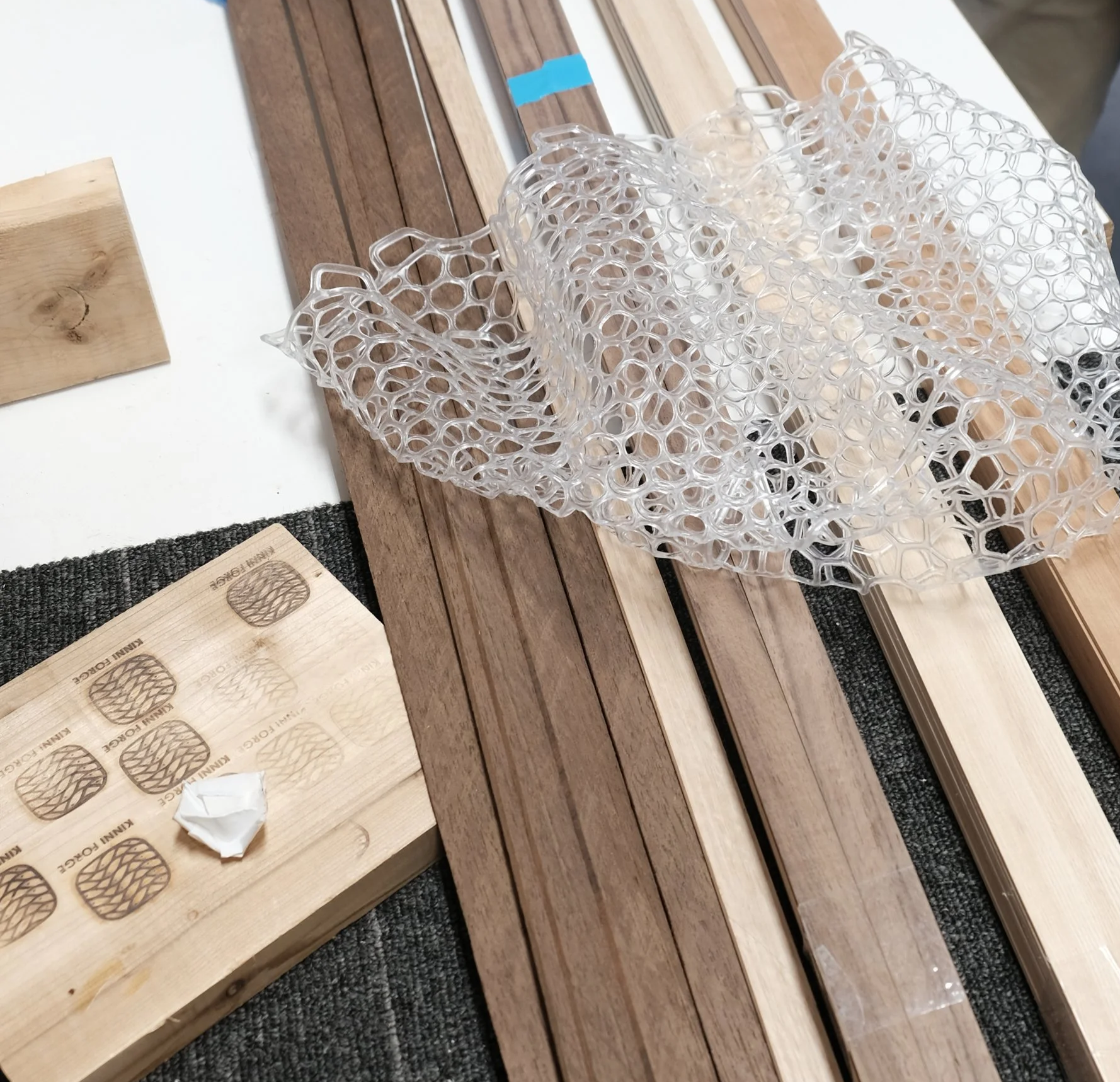
We begin by sourcing hardwoods chosen for structural strength, stability, and grain character. The lumber is milled into precise strips using dedicated jigs to ensure each layer of the frame is uniform and predictable during bending.
Strips are stored and conditioned before use to prevent internal stress or warping that could affect the final shape.
-
3:2 Building the Reinforced Core
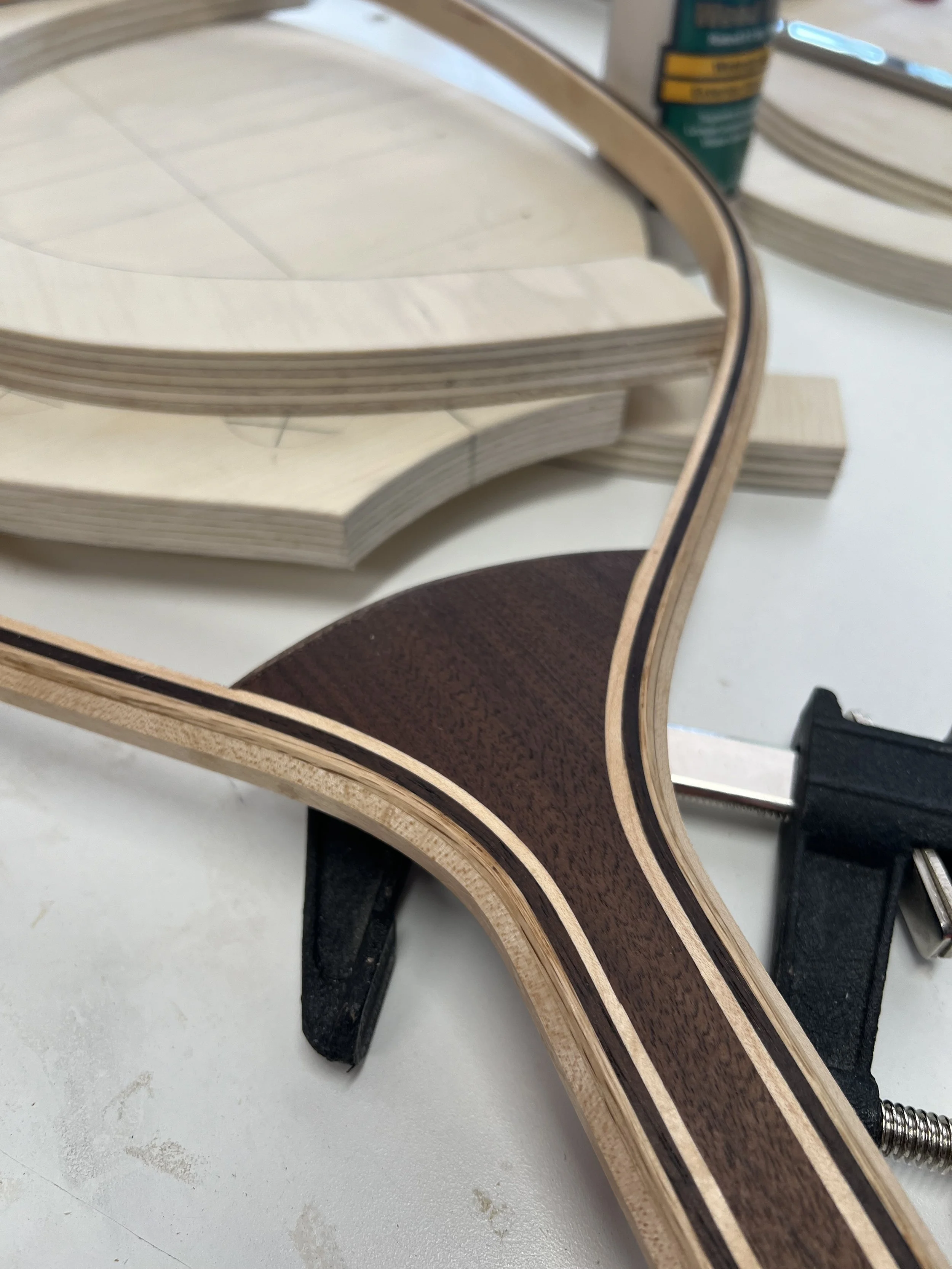
Each net is built around a solid hardwood core that defines the handle and internal structure. The profile is laser etched onto the blank, rough cut on a bandsaw, and then sanded precisely to its final geometry.
Custom cut brass reinforcements are fitted into the core to add durability at key stress points.
-
3:3 Steam Bending the Frame
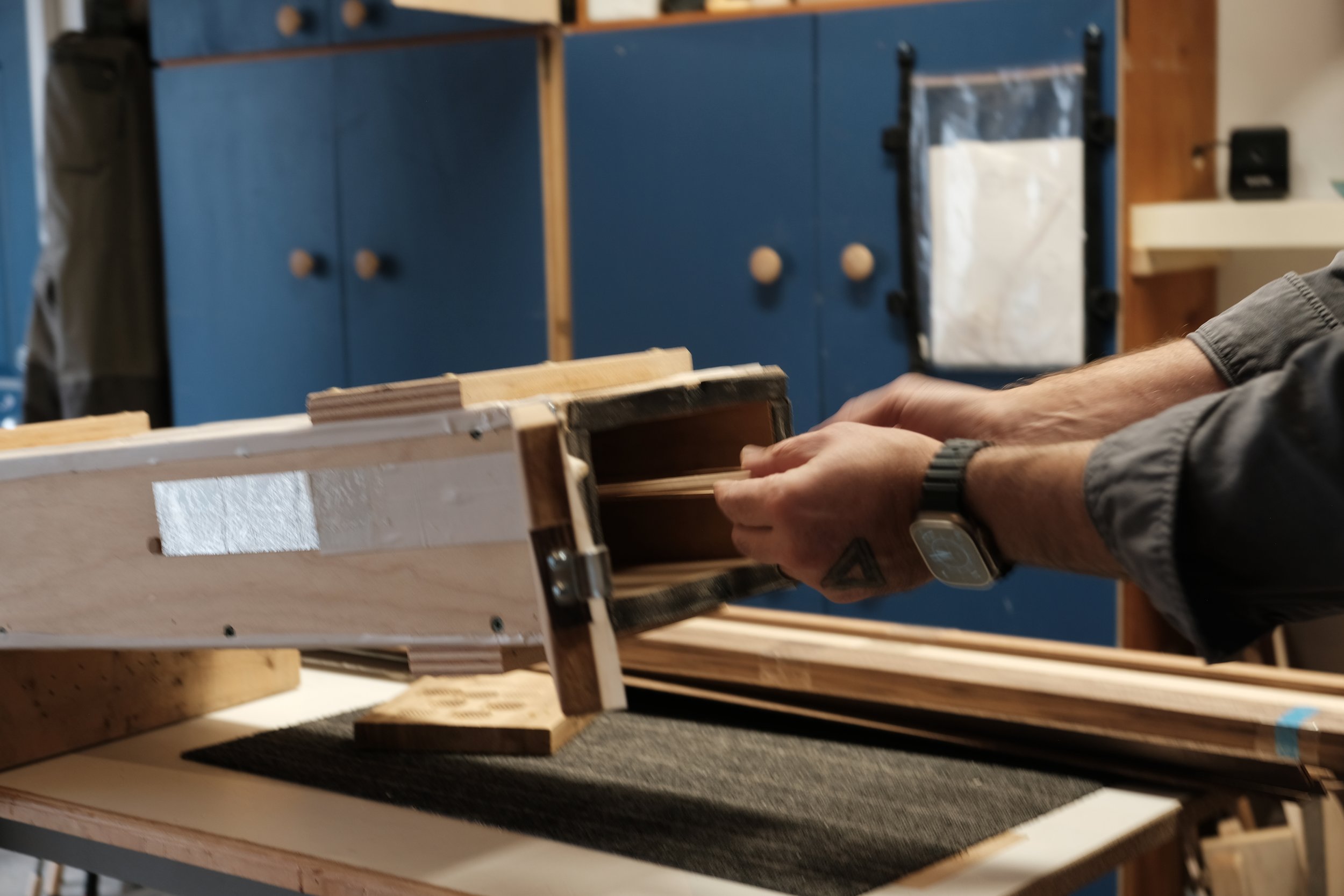
Wood strips are placed into a custom steam chamber where heat and moisture soften the lignin within the fibers. This allows the strips to bend without cracking while retaining their structural integrity once cooled.
Exact temperatures and timing are closely controlled and are part of our proprietary process.
-
3:4 Forming the Laminated Frame
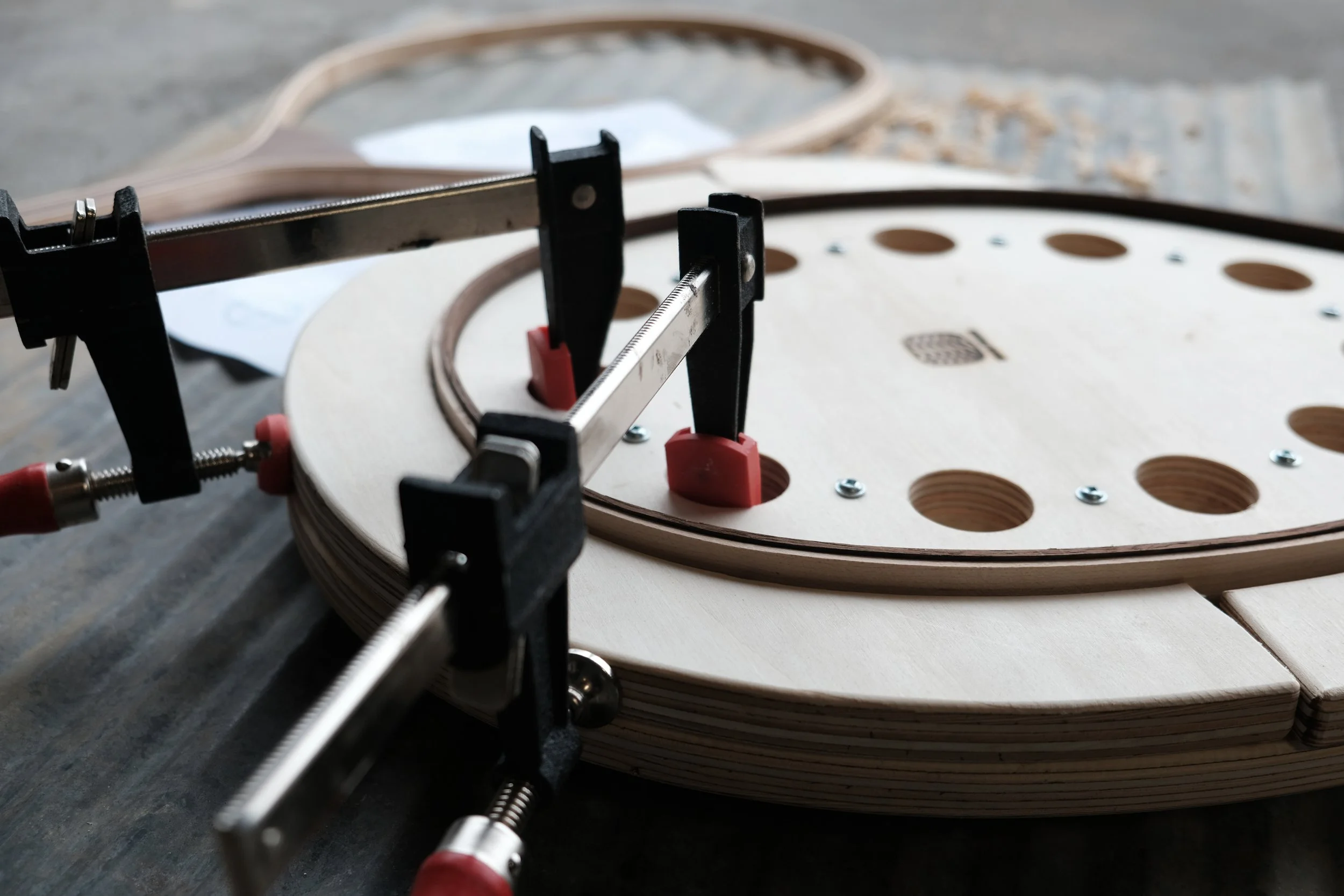
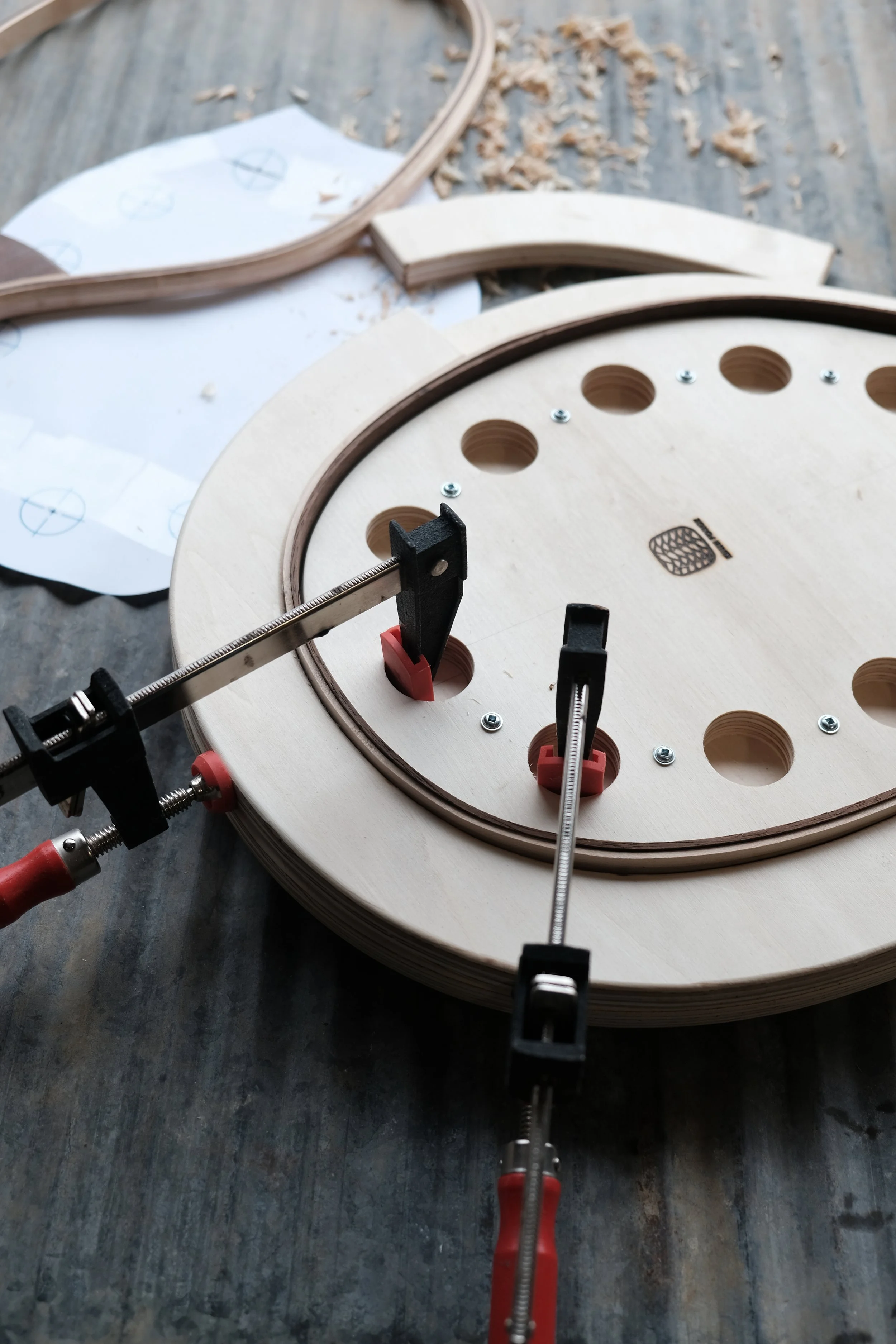
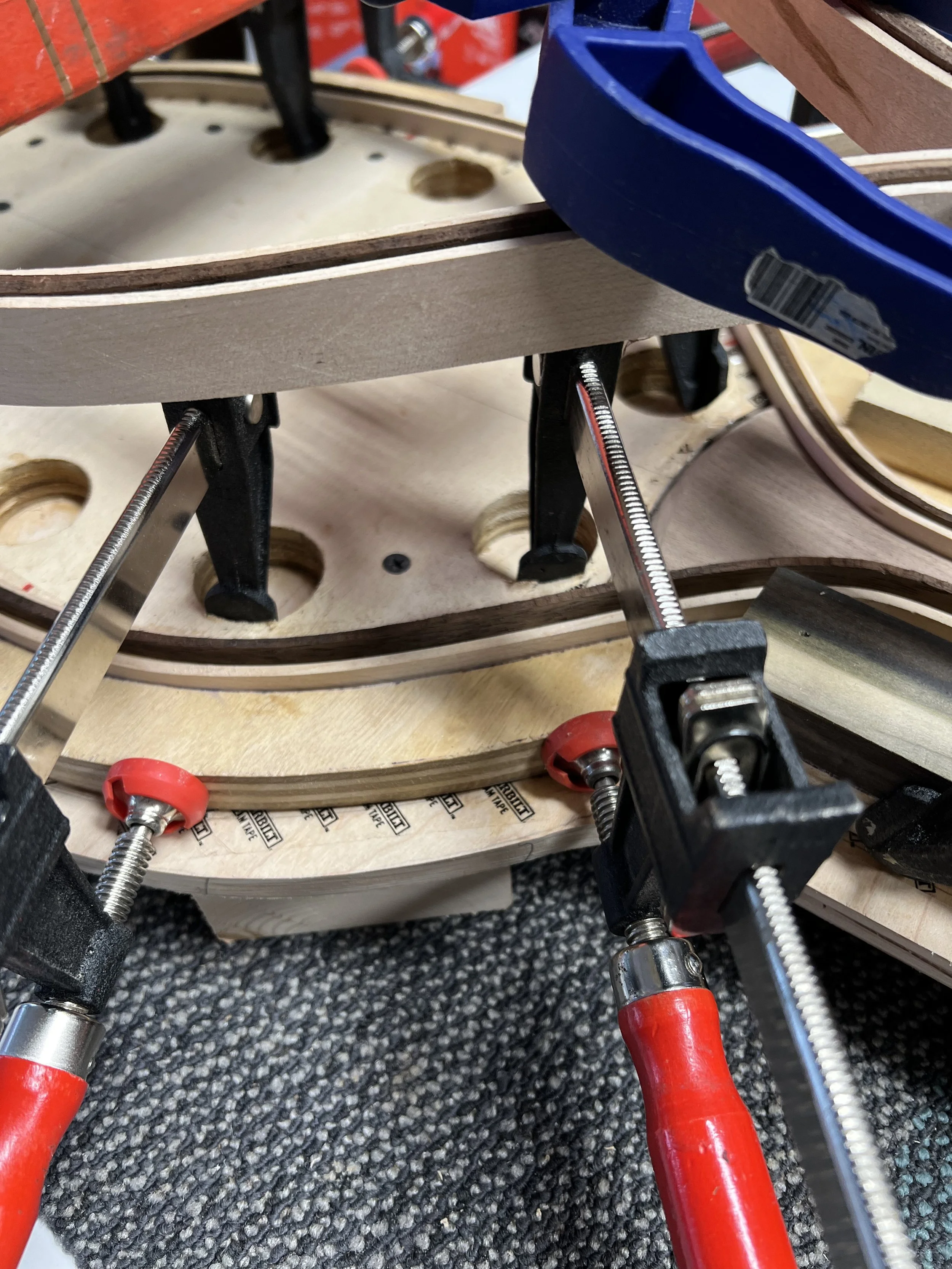
The softened strips are bent around custom molds and clamped into position around the core. After drying, the strips are removed, coated with adhesive, and clamped again to create a permanent laminated structure.
This multi stage forming process ensures the frame remains stable and does not spring back over time.
-
3:5 Curing and Structural Set
The laminated assemblies are left to cure under controlled conditions for a carefully determined period. This stage allows the adhesive to fully crosslink and ensures long term durability in changing humidity and temperature.
-
3:6 Shaping and Refinement
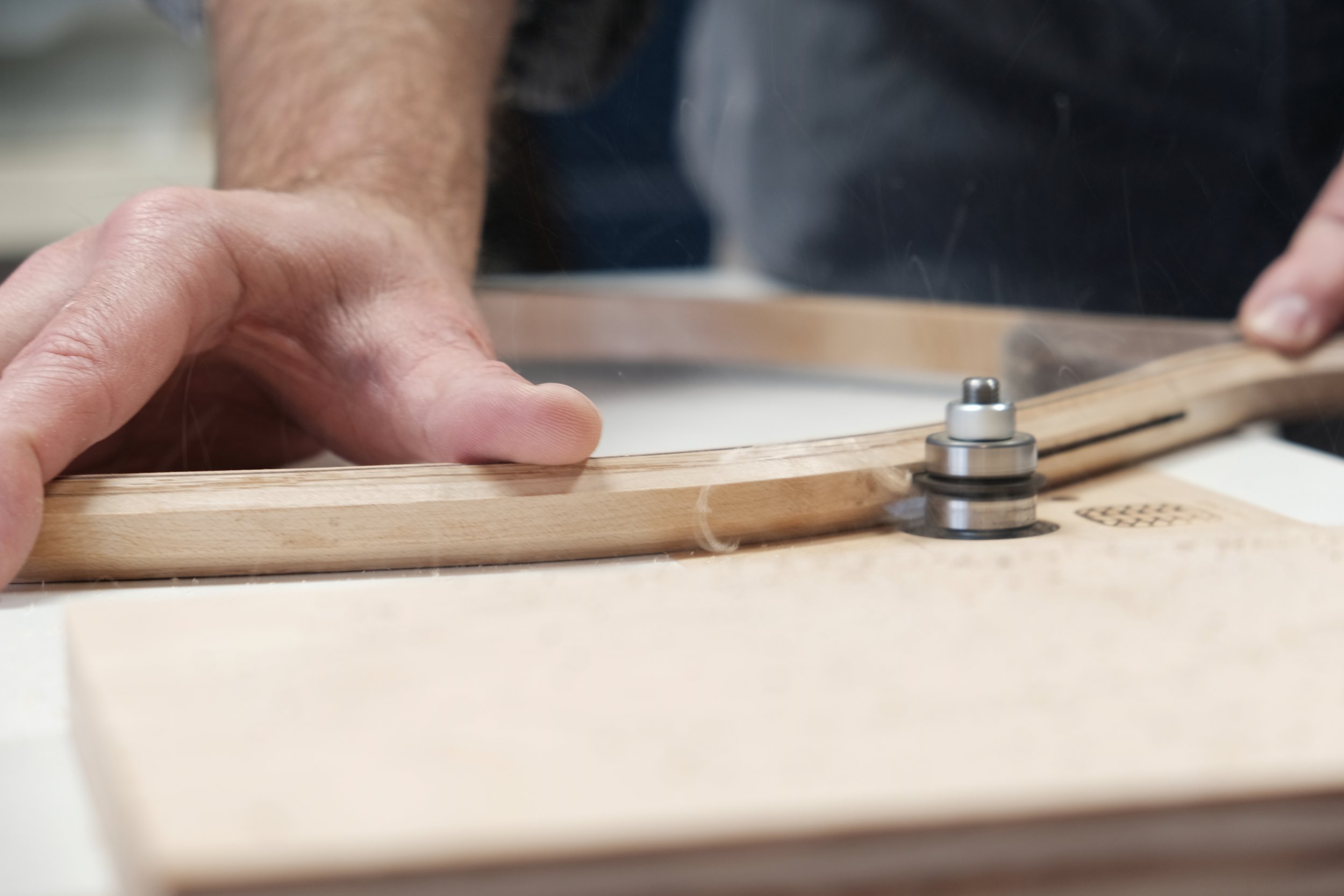
Once cured, each frame is planed, routed, and hand shaped to refine the profile of the handle and outer frame. A channel is machined around the perimeter to accept the net bag, and all stitch holes are precisely drilled.
This stage transitions the net from a structural component into a finished tool that feels balanced and comfortable in hand.
-
3:7 Finishing and Protection
The wood is sanded through multiple grits before receiving a penetrating oil treatment that enriches the grain and provides moisture resistance. Protective topcoats are then applied in multiple layers with sanding between each application.
This finishing system is designed to withstand years of exposure to water, sun, and handling.

-
3:8 Final Assembly
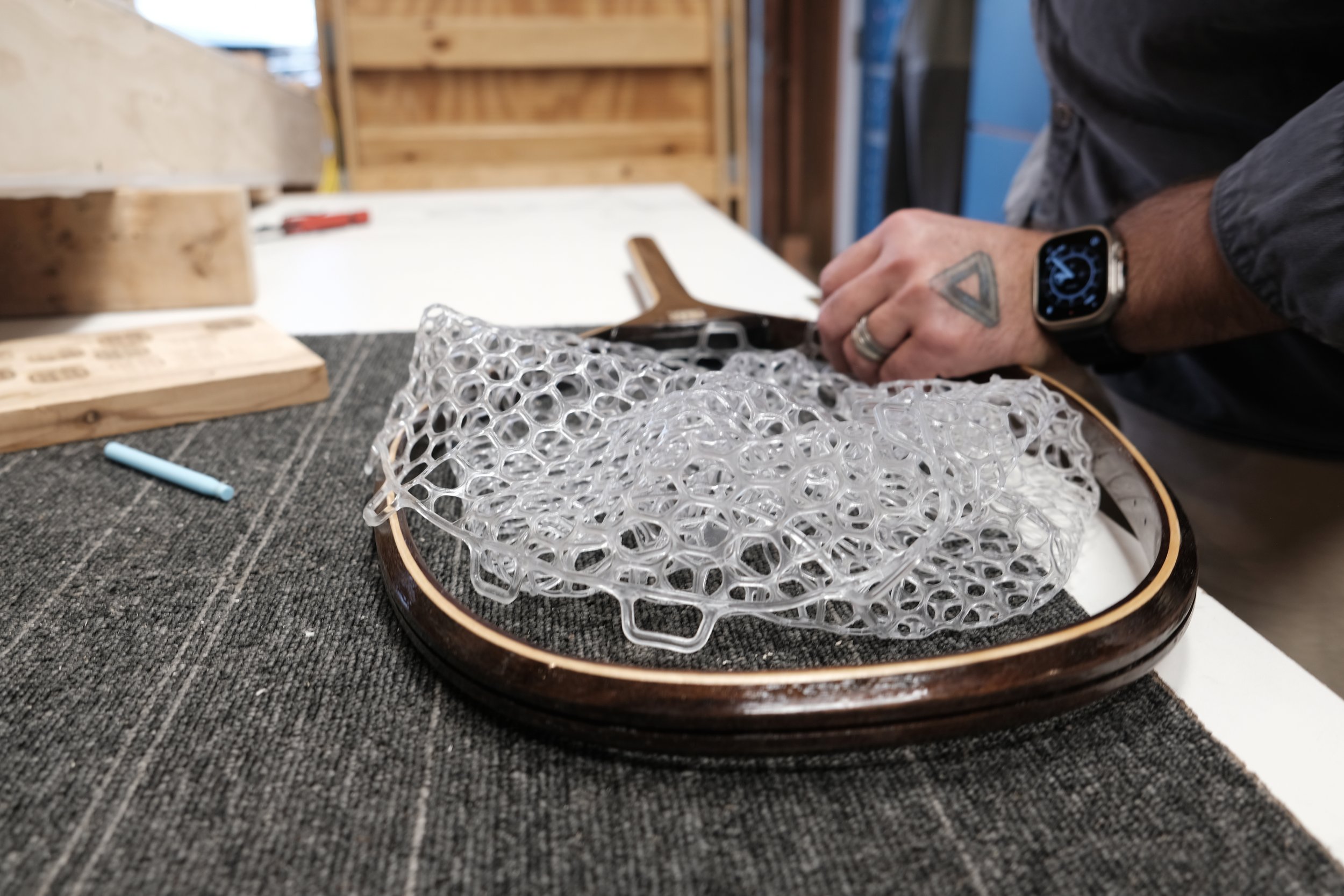
After curing, the net bag is stitched into the frame by hand, completing the transformation from raw lumber to a finished fishing tool.
The Part We Keep to Ourselves
Not Every Step Is Public
While the broad process is visible here, the specific timings, tooling modifications, adhesive schedules, and mold geometry are the result of extensive iteration and testing. Those details remain internal to Kinni Forge and are part of what makes each net structurally reliable and visually distinct.
Why This Matters
Built for Use, Not Just Display
The layered steam bent construction creates a frame that is lighter and stronger than a non steam bent mass produced alternative, while also allowing the handle and hoop to act as a continuous structure. This improves durability when landing larger fish and reduces the chance of cracking at stress points.